Main Title:The Game of Capital and the Flow of Wisdom: A Classical Economics Audiobook Library
Financial Titans: Soros & BuffettInstructional Note:
Audio: Click the portrait on the left to start the audio.Text: Click the link below to dive into the full analysis.
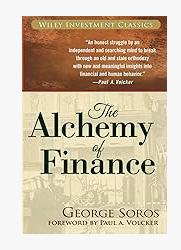
https://amzn.to/44sw5Y6George Soros: The Alchemist of Finance
Life & Journey:
Born in Hungary, George Soros survived the turmoil of both Nazi and Communist regimes. His path took him to the London School of Economics, where he was mentored by the philosopher Karl Popper. This foundation sparked his lifelong pursuit of the “Open Society” and shaped his unique ability to apply philosophical reasoning to the chaotic world of high finance.
The Core Philosophy – Reflexivity:
Unlike traditional economists who assume market efficiency, Soros champions the theory of “Reflexivity.” He argues that market participants’ biases influence market fundamentals, which in turn change their perceptions—a continuous feedback loop that drives bubbles and crashes. To Soros, financial markets are not a science, but a “炼金术” (Alchemy) of understanding the gap between perception and reality.
Why Study Him?
Soros is more than a speculator; he is a deep thinker who challenges conventional wisdom. By exploring his audiobooks and writings, you will learn to look beyond the surface, identifying the cognitive biases and market distortions that others ignore to find your own edge in the financial world.
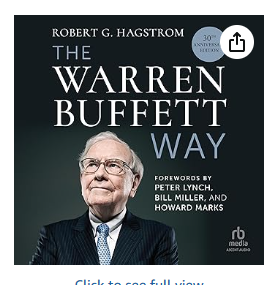
Warren Buffett: The Oracle of Omaha
華倫·巴菲特:奧馬哈先知
Life & Journey:
From a young paperboy in Omaha to the legendary Chairman of Berkshire Hathaway, Buffett’s journey is the ultimate embodiment of patience and compounding. Mentored by Benjamin Graham, he transformed the principles of “Value Investing” into a lifelong discipline of identifying intrinsic value hidden beneath market noise.
The Core Philosophy – Value & Moat:
Buffett’s approach is the antithesis of speculation. He focuses on the “Economic Moat”—the sustainable competitive advantage that protects a business from rivals. He views investing as owning a part of a great business, prioritizing long-term compounding over short-term gains, and maintaining a rational temperament even when the market succumbs to fear or greed.
Why Study Him?
Buffett’s wisdom is the anchor for any serious investor. By exploring his writings and audio resources, you will learn the power of the “long game,” the importance of fundamental analysis, and why the most valuable investment you can make is in your own ability to think independently and patiently.
As an Amazon Associate, I earn from qualifying purchases.
The Four Pillars of Economics
Discover the foundational schools of thought that shaped the modern financial world.
How to Explore:Audiobook: Click any portrait on the left to instantly listen to the audio presentation.Text Version: Click the button on the right to read the original text and deep dive
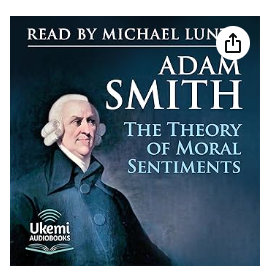
Adam Smith is widely recognized as the “Father of Modern Economics.” He founded the Classical School, which champions the power of the “Invisible Hand”—the principle that individuals pursuing their own self-interest in a free market unintentionally drive societal prosperity. For those new to economic theory, Smith’s work is the essential starting point for understanding how wealth is created and how markets naturally organize themselves.
Click here to audio
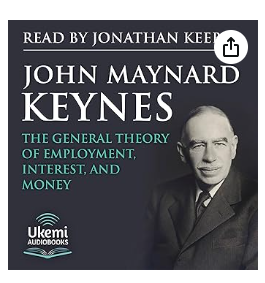
John Maynard Keynes was a British economist whose revolutionary ideas fundamentally changed the way governments manage their economies. As the founder of the Keynesian School, he argued that aggregate demand—the total spending in an economy—is the primary driving force of growth and stability. During times of economic crisis, he advocated for active government intervention and fiscal policy to prevent recessions and promote full employment. His insights remain the cornerstone of modern macroeconomics.
Click here to audio
As an Amazon Associate, I earn from qualifying purchases.
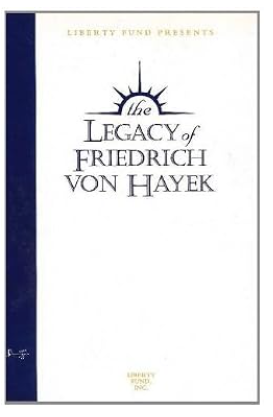
Friedrich Hayek was a pivotal figure of the Austrian School, known for his staunch defense of classical liberalism and free-market principles. He argued that the complexity of the economy is too vast for any central authority to manage effectively. Instead, he emphasized the role of the price mechanism as a vital communication system that coordinates decentralized information. His work serves as a powerful warning against government interference and a celebration of individual liberty and spontaneous order.
Click here to audio
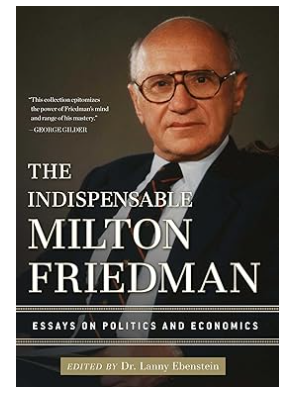
Milton Friedman was a leading voice of the Monetarist School and one of the most influential economists of the 20th century. He argued that the money supply is the primary determinant of economic growth and price stability. Friedman challenged the prevailing Keynesian consensus by emphasizing the dangers of excessive government intervention and advocating for free markets and limited regulation. His work remains the foundation for modern monetary policy and our understanding of the relationship between inflation and the money supply.
Click here to audio
As an Amazon Associate I earn from qualifying purchases.”
1. Affiliate Disclosure
Affiliate Disclosure: As an Amazon Associate, I earn from qualifying purchases.
2. Legal Disclaimer
Legal Disclaimer: This content is for informational and educational purposes only.
3. Privacy Policy
Privacy Policy: We are committed to protecting your privacy and personal data.
4. Contact Information
Contact Us::Email: info.eastwinty.com Please reach out if you have any questions or concerns regarding our content.